
Buying a Condo on Florida’s Emerald Coast: 7 Things to Check Before You Make an Offer
Buying a condo along Florida’s Emerald Coast can mean waking up near white-sand beaches, enjoying Gulf views, owning a vacation getaway, or adding a short-term rental property to your investment portfolio.
But whether you're considering a condo in Destin, Miramar Beach, along 30A, or Panama City Beach, there is much more to evaluate than the unit itself.
The condition and finances of the condominium association can affect your monthly costs, future assessments, financing options and ultimately whether a particular condo is a good fit for you.
Here are seven things we encourage buyers to investigate before making an offer.
1. Look Beyond the Monthly HOA Fee
It's easy to compare condos based simply on the monthly HOA payment.
A higher HOA fee isn't automatically bad, and a low HOA fee isn't automatically good.
The important question is: What does the fee cover?
Depending on the community, dues may include items such as building insurance, water, sewer, cable, internet, security, pools, elevators, landscaping and other amenities.
We also want to understand how much of the association's income is being directed toward reserves for future repairs.
Sometimes paying a little more each month can be preferable to buying into an association that has not adequately planned for major expenses.
2. Review Reserves, SIRS and Milestone Inspections
Florida condominium buyers should become familiar with two terms: Structural Integrity Reserve Study (SIRS) and Milestone Inspection.
A SIRS is a reserve-planning study designed to identify certain major structural components, estimate their remaining useful lives and anticipated repair or replacement costs, and recommend how the association should fund those future expenses.
Milestone inspections apply to qualifying aging condominium and cooperative buildings and evaluate the structural condition of the building.
For a buyer, these documents can provide valuable insight into the physical and financial health of a condominium.
If a study identifies major upcoming repairs without sufficient money already reserved, owners could face increased dues, special assessments or other funding measures.
3. Ask About Current and Upcoming Special Assessments
A beautiful Gulf view can look very different after discovering a significant assessment is coming.
Before making an offer, we want to know:
Are there current special assessments? Have any recently been approved? Are additional projects or assessments being discussed?
Common coastal expenses can involve roofs, elevators, exterior restoration, balconies, waterproofing, windows, painting and other major building components.
Meeting minutes, budgets, reserve studies and association disclosures can help reveal expenses that may not be obvious from the listing.
If an assessment already exists, the purchase contract can also address whether the buyer or seller will be responsible for paying it, subject to the terms negotiated by the parties.
4. Understand the Association’s Master Insurance
Insurance is another major consideration when buying coastal property.
The condominium association typically carries a master insurance policy covering certain portions of the building and common elements. Individual owners generally need their own appropriate coverage for the unit and personal property.
But don't stop at asking whether insurance exists.
Buyers and their lenders may need information about the association's coverage, deductibles and other policy details.
Insurance costs can also influence future HOA budgets, so this is part of understanding the condo's overall financial picture—not simply checking a box before closing.
5. Confirm the Condo Can Be Financed
This one surprises many buyers:
You can be financially qualified for a mortgage and still encounter financing problems because of the condominium project itself.
Lenders may review the association's budget and reserves, insurance, special assessments, structural issues, litigation and other project characteristics.
Financing can become especially complicated with resort-style properties or buildings that may have hotel, condotel or transient-rental characteristics.
Fannie Mae also changed its condominium project-review requirements in 2026. For loan applications dated August 3, 2026 or later, the previous Limited Review process has been retired. Depending on the transaction, a project may now require a Full Review or qualify for a Waiver of Project Review.
That's why we encourage financed buyers to involve their lender early—ideally before becoming emotionally committed to a particular building.
A previous conventional sale in a condominium does not guarantee that your loan will receive the same approval today.
6. Verify Short-Term Rental Rules Before Counting on Rental Income
If rental income is part of your plan, don't assume that every beach condo allows vacation rentals.
Rules can vary significantly from one condominium to another.
We want to verify things such as:
-
Minimum rental periods
-
Association rental restrictions
-
Local registration or licensing requirements
-
Whether owners may self-manage
-
On-site management requirements or options
-
Applicable city or county regulations
We also prefer actual rental statements when available rather than relying solely on projected rental income.
A strong-looking projection is useful information, but documented historical performance can give an investor a much better starting point.
7. Calculate the Real Cost of Ownership
The purchase price is only one piece of the equation.
Before deciding whether an Emerald Coast condo makes financial sense, consider the complete ownership picture:
Mortgage + HOA dues + property taxes + insurance + assessments + utilities + management expenses + maintenance
For investment properties, we also look at realistic rental income, management fees, cleaning expenses and potential periods of lower occupancy.
Two condos with similar asking prices can have dramatically different ownership costs.
Understanding those numbers before making an offer can help you compare properties based on value—not just price.
The Bottom Line
There are outstanding condo opportunities throughout Destin, Miramar Beach, 30A and Panama City Beach.
The key is knowing what you're buying.
We don't believe a buyer should choose a condo based solely on the view, asking price or projected rental income. The association's financial condition, building inspections, insurance, financing eligibility and rental rules can be just as important as what is inside the unit.
That's why our approach is to help buyers ask the right questions before they make a major commitment.
If you're considering buying a condo anywhere along Florida's Emerald Coast, Greg and Mandy with MG-Lifestyle Group | NextHome Emerald Coast would be happy to help you compare properties, research the details and connect you with the appropriate lending, insurance and other professionals along the way.
Ready to start exploring Emerald Coast condos? Contact Greg & Mandy and let's find the property that fits your lifestyle, goals and budget.
This article is provided for general informational purposes and is not legal, lending, insurance, tax or financial advice. Condominium requirements, association information, financing guidelines and local rental regulations can change. Buyers should verify information applicable to a specific property with the appropriate association, lender and other qualified professionals.
FROM OUR BLOG
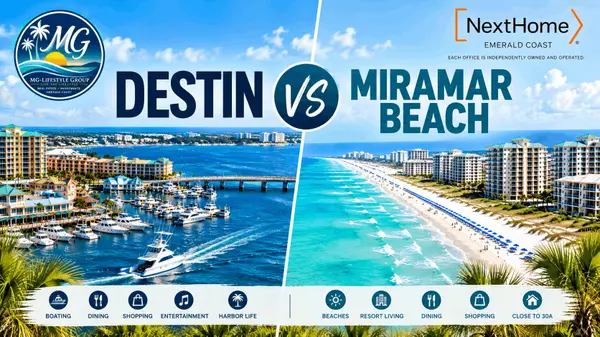
Which Condo Market Fits You ?
Destin vs. Miramar Beach Condos: Which Is Right for You? If you’re shopping for a condo along Florida’s Emerald Coast, Destin and Miramar Beach will probably both end up on your radar. They’re next-door neighbors with beautiful Gulf beaches, vacation-rental opportunities, restaurants, shopping, and
What Buyers Learn Touring Emerald Coast Condos
Touring one condo can make a strong first impression. Touring several condos in the same afternoon gives buyers something even more valuable: perspective.We recently spent a full Sunday showing condos in Destin, comparing multiple units, buildings, views, amenities, and locations. Even when properti

Our Story Is Part of Our Brand MG-LIFESTYLE GROUP wasn't created in a conference room—it grew from the life we've built together. When Mandy and I made the Emerald Coast our home, we weren't just changing our address. We were choosing a different way of living. We embraced early mornings, beach walk